


Venezuela Attack Plus Taiwan: Destroying The Technology
- Yuşa Kaymakçı

- Jan 29
- 3 min read

As of today, the United States has launched an airstrike against Venezuela. Strategic locations were hit by fighter jets and attack helicopters. According to President Trump’s statement, Venezuelan leader Nicolás Maduro and his wife were captured by U.S. Special Operations forces and removed from the country. These events have significantly intensified the long-standing fears of a Chinese invasion of Taiwan.
The Birth of Taiwan: A Geopolitical Outpost
Taiwan is an island nation located southeast of China. While recognized as a sovereign state by many Western bloc countries, its independence is not formally acknowledged by China or numerous other states.
Following the rise of Mao Zedong and the Communist Party, liberal-democrats fled mainland China and took refuge on the island. The U.S. became their protector—a role driven by both the post-WWII strategy of combating Communism and the desire to establish a powerful "outpost" in close proximity to China.
The First Island Chain and Overseas Production
U.S. security doctrines consistently prioritize the "First Island Chain"—stretching from Japan and Taiwan to the Philippines and Indonesia. Control over the Pacific begins at these borders. Under the U.S. security umbrella, these nations focused on education and technology rather than defense spending. Recognizing this potential, U.S. corporations moved their production facilities to this region, laying the groundwork for the modern global economic order.
TSMC: The Most Important Company in the World
Taiwan’s survival is inextricably linked to TSMC (Taiwan Semiconductor Manufacturing Company). Founded by Dr. Morris Chang, who applied his U.S. education to build a domestic tech titan, TSMC has become the world’s ultimate monopoly.
Market Share: TSMC produces over 60% of all semiconductors globally.
Advanced Tech: It manufactures more than 90% of the world's most advanced chips used in smartphones and PCs.
AI Leadership: 100% of the advanced chips required to run AI models are produced by TSMC.
TSMC is more than just a company; it is the center of a specialized human ecosystem. Of its 83,000 employees, 90% are Taiwanese, and 90% of its production takes place on the island. Through 57 semiconductor programs across 17 universities, Taiwan has cultivated the world's most critical talent pool. An uncontrolled attack on Taiwan would not just be a territorial shift; it would be the "brain death" of global technology.
The Silicon Shield and the Arizona Pressure
In recent years, the U.S. has attempted to "re-shore" production to mitigate the risks of external dependency. Under the CHIPS Act, TSMC was pressured to build a facility in Arizona. However, the Arizona site lacks the highly integrated supply chain found in Taiwan’s "Science Parks" (Hsinchu, Taichung, and Tainan). In Taiwan, suppliers and R&D centers are located within a two-hour radius, ensuring maximum efficiency. Replicating this in the vast U.S. geography is proving costly and less efficient, leading to higher prices for consumer electronics.
Rising Tensions: China’s "Invasion Rehearsal"
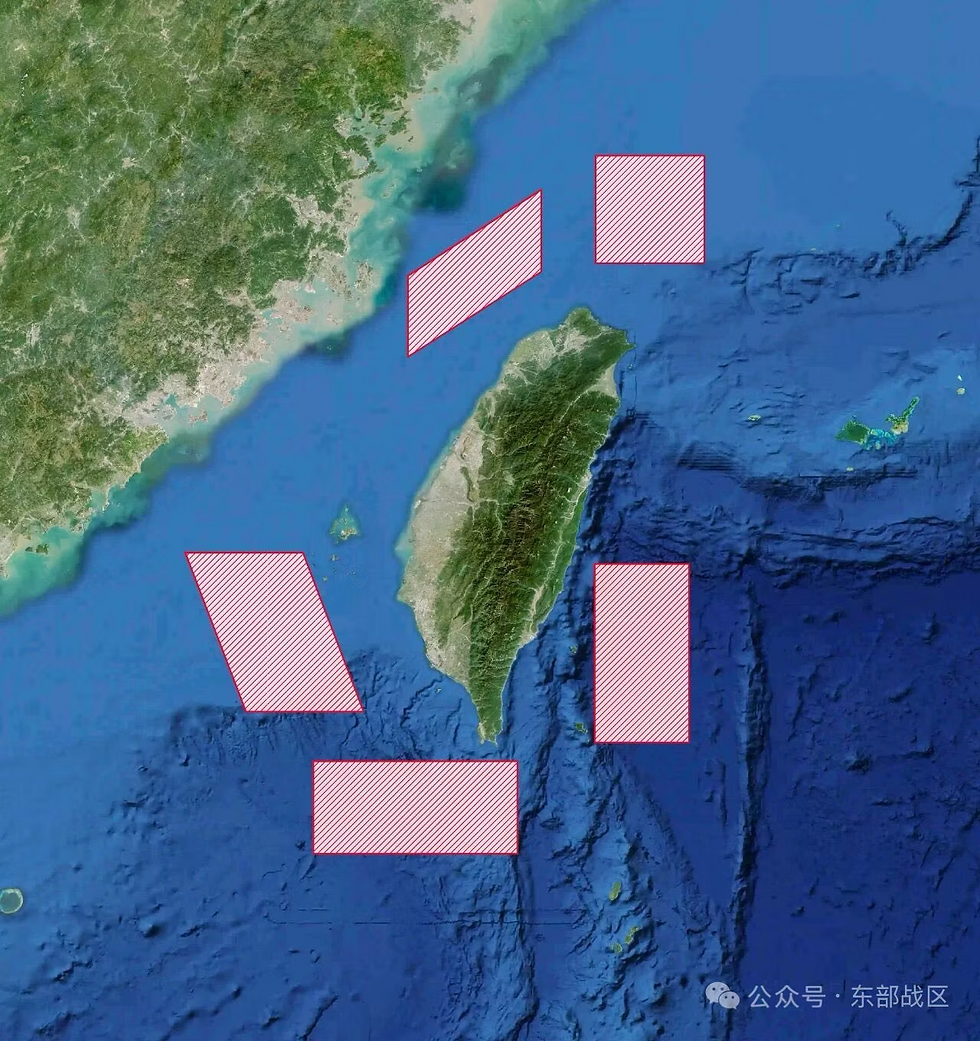
China has abandoned its policy of silence. Emboldened by its domestic defense industry, Beijing is constantly harassing the island with warships and jets. Following a $13 billion arms deal between the U.S. and Taiwan, China launched a massive week-long military exercise, effectively blockading the island and forcing the cancellation of 80,000 flights.
A recent image shared by Chinese state media depicts Taiwan as a cricket, exhausted by the weapons the U.S. has forced into its hands. A giant wheel, representing "Reunification," looms over the cricket, implying that if Taiwan continues to resist under U.S. pressure, it will be crushed. President Xi Jinping’s message was clear: "The U.S. cannot stop the reunification of Taiwan."

The Intersection of Technology and Geopolitics: Total Erasure
We are in an era where every nation is fighting for economic independence, which requires technological sovereignty. To have both, one must have Taiwan.
A world without Taiwan is a world that regresses to the 1990s:
Consumer Tech: Smartphones and PCs would become extreme luxuries.
Connectivity: Mobile 5G modems and high-speed data would vanish; we would return to simple voice calls and wired headphones.
AI: Without TSMC-produced GPUs, AI would remain a theoretical concept rather than a reality.
Automotive: Modern safety features like lane-keep assist and collision prevention would disappear from all but the most expensive luxury vehicles.
If China attempts to seize Taiwan, the U.S. has even considered "scorched earth" policies—destroying the factories to prevent the technology from falling into Chinese hands. In such a scenario, humanity would effectively dismantle everything it has built over the last half-century.
Conclusion
The events in Venezuela, the unrest in Iran, and the escalating blockade of Taiwan are not isolated incidents. They are the gears of a global restructuring. As the "American Order" turns toward aggressive interventionism, the "Silicon Shield" of Taiwan is being tested like never before. If this shield breaks, the digital age as we know it may come to an abrupt and silent end.


Comments